What is
Continuous
Improvement?
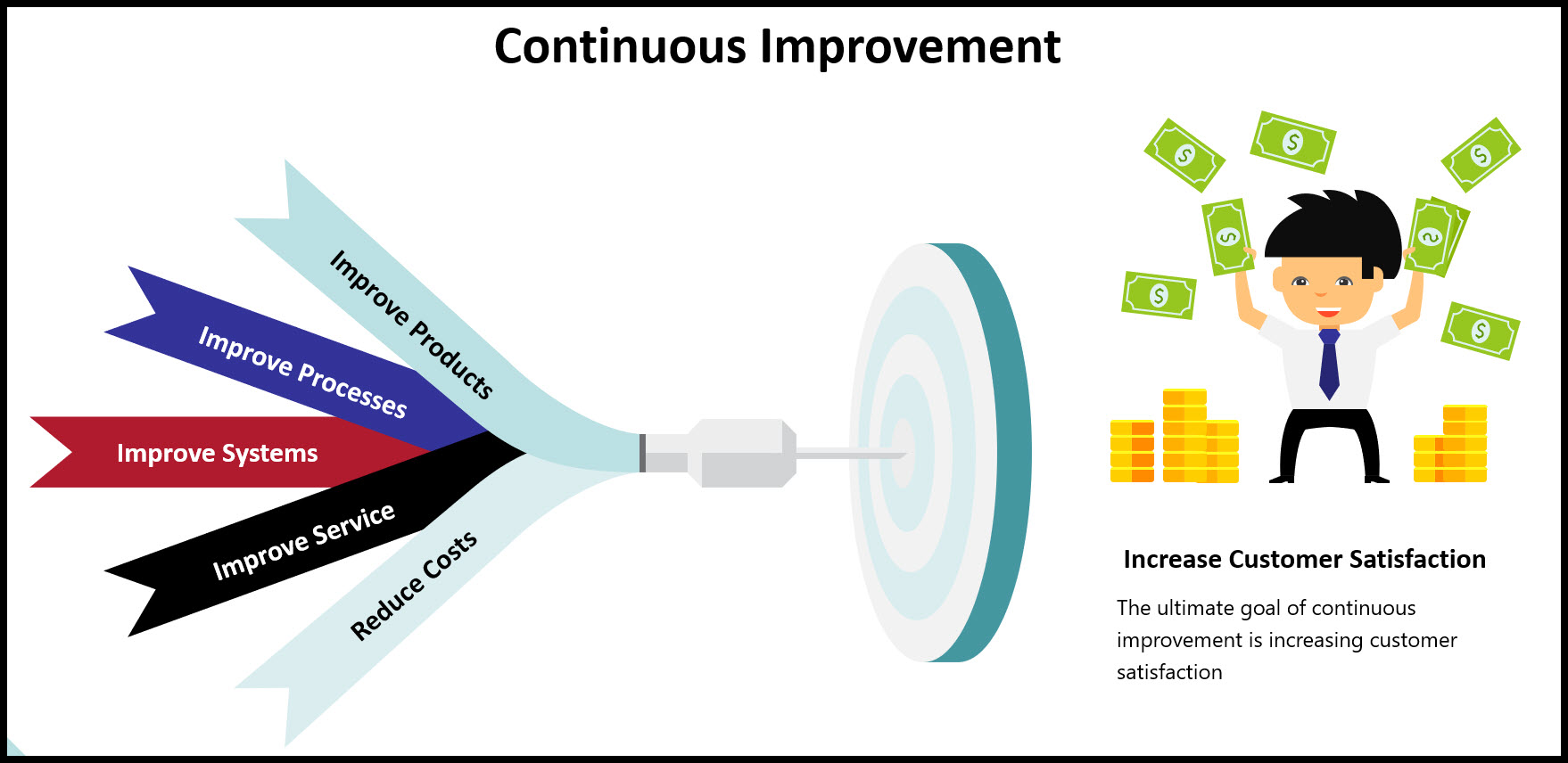
What is continuous improvement? Continuous improvement is the process of upgrading or advancing your organization’s products, processes, systems, and services.
To me, continuous improvement is natural. Continuous improvement should be a major discipline of your company’s culture. When developing your Quality Assurance policy include continuous improvement.
An organization that focuses on continuous improvement, finds problems or potential problems and implements change that eliminates those problems. The change must be positive and not create other problems.
The ultimate goal of continuous improvement is increased customer satisfaction. This can come from improving product traits or making your organization easier to do business with.

8D Manager Software with 8D, 9D, 5Y and 4M report generator. Your corrective action software for managing, measuring, and reporting issues.
Another continuous improvement goal is driving down costs. This can be product cost, process costs, quality costs, raw material cost and administration cost.
All employees are responsible for continuous improvement. Therefore continuous improvement tools need to be taught to all levels of the organization.
There have been many management disciplines that drive continuous improvement. These include Total Quality Management, Total Quality Control, ISO 9000 certification, Kaizen, Lean Manufacturing, and Six Sigma.
It seems every 5 years there is another quality management discipline that pushes continuous improvement. These disciplines are not mutually exclusive and they all blend in with each other. They all have their tools and the tools are all helpful.
In order to improve, measure the improvement. If you cannot measure the improvement then you waste your efforts. See examples of some metrics here.
More Info
7 Wastes of Lean
Learn the 7 Wastes of Lean with this article.
Lean Manufacturing
Lean manufacturing is a generic process management philosophy derived mostly from the Toyota Production System (TPS)
Here we Define Kaizen Events, Blitzes, and the 5S Concept.
We define Kaizen as an important continuous improvement tool for your business. Understand the Kaizen 5S concept of small improvement changes.
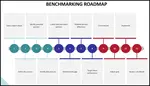
Benchmarking Definition and Benchmarking Best Practices
Our Article on benchmarking definition, benchmarking best practices, advantages of benchmarking and benchmarking steps. What is benchmarking?
Level Mix Model Production
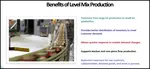
Level Mix Model Production means scheduling daily production in a sequence that evens out the peaks and valleys of produced quantities. Learn more!
Mistake proofing
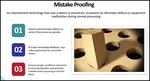
Mistake proofing is defined as an improvement technology that uses a device or procedure
Quick Changeover
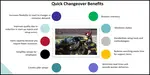
a NARROW view of Quick changeover as only the time required to pull an existing tool or fixture and set the new tool or fixture. but there is much more to it.
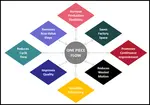
One Piece Flow
This article discusses all the benefits to one piece flow. Work cells help your manufacturing process with this.
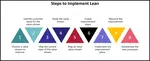
Lean Thinking
Become a friend with lean thinking. Learn the steps to implement the lean process.
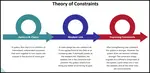
Theory of Constraints Concepts and Details
See our article on Theory of Constraints. Every system keeps at least one constraint that limits the system outputs
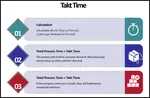
Takt Time
Takt Time is defined as :The rate at which the end product or service must be produced
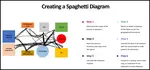
Spaghetti
Spaghetti Map or Physical Process Map is the simplest Lean Sigma tool. It demonstrates the physical flow of an entity or multiple entity types
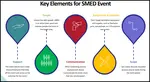
SMED
SMED: Rapid changeover or rapid setup is also known asSingle Minute Exchange of Dies (SMED) and was devised by ShigeoShingo
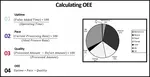
OEE
Overall Equipment Effectiveness ( OEE ) is used extensively in the maintenance and equipment reliability world to examine equipment availability.
Lean vs Agile
Lean vs Agile: Which process methodology is best for your industry?
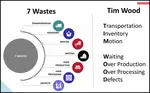
The 7 Wastes of Lean
Learn the 7 wastes of Lean, the Tim Wood acronym, and how they affect your company's bottom line and the actions to counter these wastes.
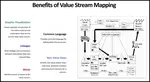
Value Stream Mapping
a value stream mapping is the first step required in any lean improvement initiative
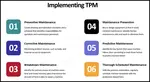
TPM
Total Productive Maintenance: Learn the implementation steps for full TPM at your facillity.


 |
Software, Videos, Manuals, On-Line Certifications | |
 |
450+ Editable Slides with support links | |
|
|
Corrective Action Software | |
 |
Plan and Track Training | |
 |
AQL Inspection Software | |
 |
Learn and Train TRIZ |